



Traditional Full Dentures
Dental Services
Get Started Today!
Columbus, OH
(614) 999-1500
Exton, PA
(610) 903-2020
Pittsburgh, PA
(412) 595-1212
Choose your location
Monday To Friday
08:00am - 05:00pm Closed on Weekends
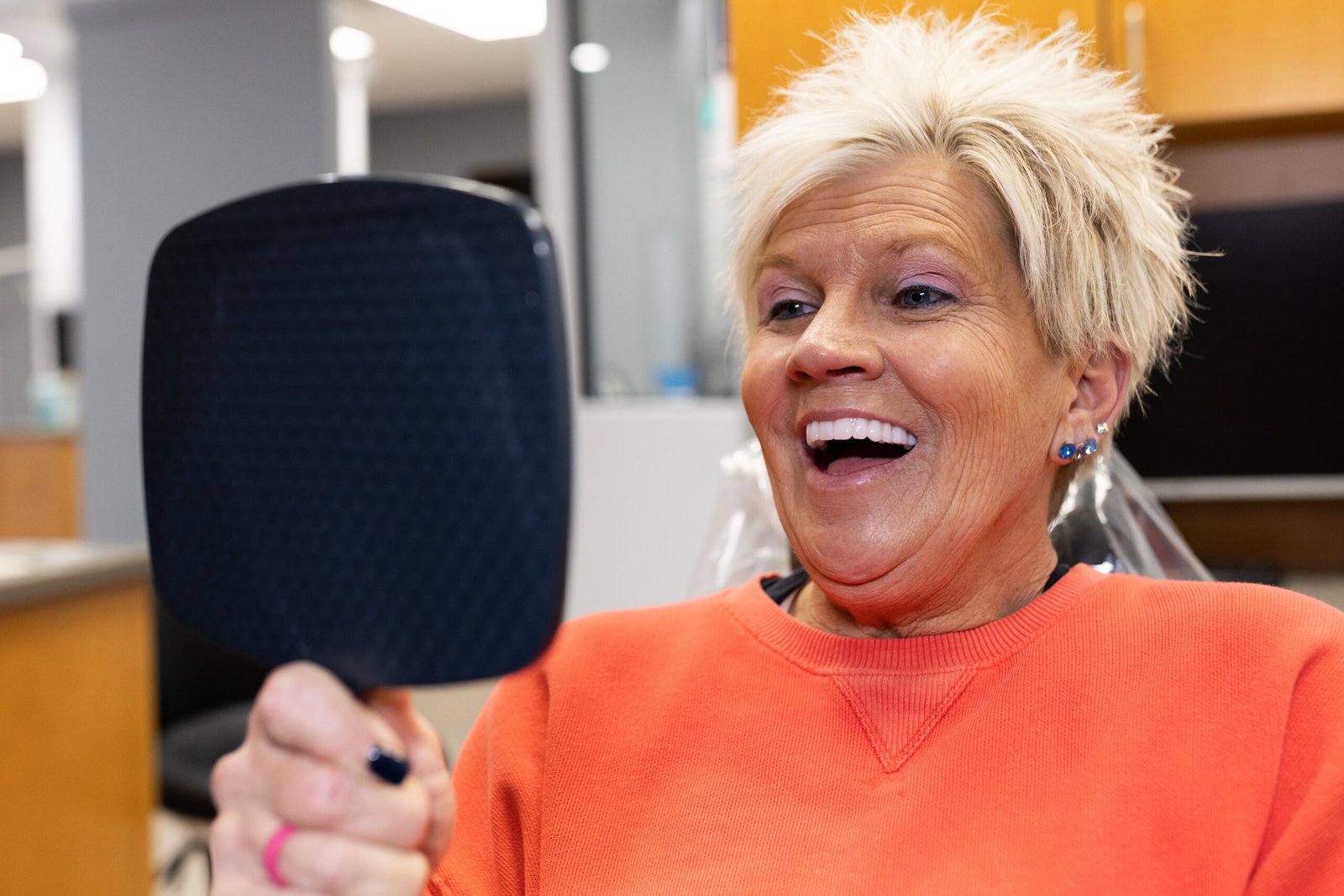
Traditional Dentures
With our in house dental lab, we provide beautiful, custom-made dentures quickly. ViaSmiles provides the best care with great pricing in Georgia and Ohio.
Advantages of Dentures
For patients who are looking for the most affordable tooth replacement option or who are not candidates for dental implants, traditional dentures offer a better quality of life.
- Improved confidence – Great looks and a new smile.
- Looks – Dentures provide great looks and are easily customized for each individual.
- Facial support – Dentures help to fill back out areas of the face that have sunken in following tooth loss.
- Improved nutrition – Improved chewing ability leads to better digestion and improved nutrition.
- Affordability – Dentures are the most cost-effective way to replace a full arch (upper or lower) or a full mouth of teeth.
- Improve quality of life – enjoy a higher quality of life with the ability to eat more of the foods you enjoy and laugh and smile with friends and family.
The functionality of dentures makes them a suitable choice for many patients who wish to improve their smiles.
How Dentures Work
Depending on the condition, the dentist may recommend partial or full dentures to restore a patient’s smile.
- Full Dentures: For patients who are looking to replace all their teeth in an arch or full mouth, or who are not candidates for dental implants, traditional dentures offer a great-looking, affordable option.
Partial Dentures: Unlike full dentures, partial dentures only replace missing teeth while keeping your healthy natural teeth in place.
Schedule Your Consultation
Dentures are a proven appliance recommended by many dentists to help improve patients’ smiles after tooth removal or loss. To learn more about how dentures can enhance your smile, contact your dentist today!
What are dentures?
Dentures are custom-made prosthetic teeth designed to replace missing natural teeth. Full dentures replace all of the teeth in your upper arch, lower arch, or both. They’re fitted to your mouth and designed to look as natural as possible, with the shade, shape, and size of each tooth tailored to complement your face. For many patients, dentures are the first step toward restoring their ability to eat, speak, and smile with confidence
How do I know if I need dentures?
If you’re dealing with multiple missing teeth, teeth that are loose or painful, or dental problems that have gotten to the point where you’re avoiding eating certain foods or smiling around other people, it may be time to consider dentures.
Some common signs that dentures could be the right next step include chronic tooth pain that keeps coming back despite treatment, gums that are red, swollen, or bleeding regularly, teeth that have shifted or become noticeably loose, and difficulty chewing foods you used to eat without thinking about it. Many patients we see have been putting off the decision for years, living with pain and embarrassment when a fresh start could have changed everything much sooner.
The best way to find out where you stand is a thorough evaluation. During your consultation, we’ll assess your oral health, talk through your options, and help you understand whether dentures, implants, or a combination of both is the right path forward for your situation.
What are the advantages of dentures?
For patients who need to replace a full arch or a full mouth of teeth, dentures remain the most affordable option available. They can restore your ability to eat, speak, and smile with confidence, and for many people, that alone is life-changing.
Beyond the basics, dentures offer real benefits that are easy to overlook. Tooth loss causes the facial muscles to sag over time, giving your face a sunken, aged appearance. Dentures fill out those areas and restore the natural shape and support of your face. Chewing ability improves too, which means better digestion and better nutrition overall.
Today’s dentures are also far more natural-looking than what most people picture. The shape, shade, and size of each tooth can be customized to complement your face, and a well-made set is difficult for anyone else to spot.
If cost is a primary concern and you’re not ready for a larger investment like dental implants, dentures are a solid, proven solution that can dramatically improve your quality of life and self-esteem.
How much do dentures cost?
The cost of dentures depends on the type you need and the level of customization involved. Basic full dentures are the most affordable tooth replacement option available, and pricing can vary based on the materials used and whether extractions or other preparatory work is needed.
At ViaSmiles, we believe in transparent pricing. During your consultation, we’ll give you a complete estimate that covers everything so there are no surprises down the road. We also offer flexible financing and payment plan options, including CareCredit, to help make treatment fit your budget. If you’re wondering whether your insurance or Medicare covers any portion of the cost, we can help you figure that out too.
Does insurance cover dentures?
Many dental insurance plans do cover a portion of the cost of dentures, though coverage varies widely depending on your plan. Some plans cover a percentage of the total cost, while others have annual maximums that limit how much they’ll pay. Medicare generally does not cover routine dental work, including dentures, though some Medicare Advantage plans may offer limited dental benefits.
The best way to find out what your plan covers is to bring your insurance information to your consultation. Our team will help you understand your benefits and walk you through what your out-of-pocket cost will look like.
What's the difference between dentures and dental implants?
Traditional dentures are removable prosthetic teeth that sit on top of your gums. They’re held in place by suction, adhesive, or a combination of both. They’re the most affordable option for replacing missing teeth, but they do come with trade-offs. Dentures can slip during eating and speaking, they require nightly removal and soaking, and because they don’t stimulate the jawbone, bone loss continues over time, which changes the fit and the shape of your face.
Dental implants are a fixed, permanent solution. With a procedure like All-On-4®, implants are anchored directly into your jawbone and a full arch of teeth is attached to them. They don’t move, they don’t come out, and they help preserve your bone. You brush and clean them like natural teeth. The investment is higher upfront, but over time, implants often cost less than decades of denture replacements, relines, adhesives, and adjustments.
For patients who want the stability of implants but aren’t ready for the full investment, implant-supported overdentures are a middle ground. Two to four implants can be placed to snap a denture securely into place, giving you much better stability and bite force than a traditional denture alone.
My friend's dentures look so fake. Will mine look that way?
This is one of the most common fears patients share with us, and the answer is no. Our lab team specializes in creating teeth that look natural, not the oversized, uniform look that gives dentures a bad reputation. We pay close attention to the shade, shape, size, and spacing of each tooth so your smile looks like it belongs to you. No one will know unless you tell them.
How do dentures fit?
The fit depends largely on your individual anatomy. Full upper dentures tend to fit well because they create a natural suction against the roof of your mouth. Full lower dentures are a different story. Your tongue and cheeks are constantly working against them, which can cause them to feel loose or like they’re floating.
This is exactly why we strongly recommend securing lower dentures with dental implants. Even just two implants can dramatically improve the stability and comfort of a lower denture, and for most patients it makes a night-and-day difference in their ability to eat and speak without worry.
How quickly can you make my dentures?
Having an on-site lab gives us a major advantage over most offices. In some cases we can fabricate dentures in as little as one day. That said, the most important thing to us is getting them right. A denture you’re truly happy with, one that fits well, looks natural, and feels comfortable, can sometimes require extra appointments spread over a few days. We’d rather take that time than rush the process and have you leave with something that doesn’t meet your expectations.
What are immediate dentures?
Immediate dentures are placed the same day your natural teeth are removed, so you never have to go without teeth during the healing process. At our clinic, your immediate dentures will receive soft liners to help them fit more comfortably as you heal and your jaws gradually change shape over the following months.
How long does it take to get used to new dentures?
There’s an adjustment period with any new denture, and it’s important to know that going in. Most patients need a few weeks to get comfortable with how their dentures feel, and it can take a bit longer to feel fully confident eating and speaking with them.
In the beginning, your mouth is learning to work with something new. Your tongue, cheeks, and lips all need time to adapt. Eating will feel different at first, and many patients start with softer foods before working their way back to a more normal diet. Speaking can feel slightly off for the first week or two as well, but most people find that reading out loud or practicing conversation at home speeds things up.
The key is patience. Every day gets a little better, and within a few weeks most patients tell us their dentures feel like a natural part of their routine.
Will dentures affect the way I talk?
Some patients do notice a slight change in their speech when they first get dentures, especially with certain sounds. A mild lisp or whistling on “s” and “f” sounds is common in the first week or two while your tongue adjusts to the new shape in your mouth.
This is temporary for the vast majority of patients. Practicing at home by reading out loud, talking through your normal day, or even singing along to music helps your mouth adapt faster. If speech issues persist beyond the first few weeks, let us know. A small adjustment to the fit of your denture can often resolve it.
How long does it take my jaws to heal after extractions?
Healing times vary from person to person, but most patients can expect the process to take 6 to 12 months. During this time, your bone and gum tissue are remodeling, which is why your dentures may need periodic adjustments or relines to maintain a good fit as things settle.
My dentures make my gums sore. What can I do?
Sore gums are common, especially with new dentures, and there are a few things that can cause it.
High pressure spots are the most frequent culprit. These are normal with any new denture and typically just require a simple adjustment at our office. Movement of the denture can also rub against your tissue and create sore spots over time. If this is a recurring issue, securing your dentures with implants significantly reduces the problem. And sometimes the soreness is simply from wearing them all day. Dentures are foreign to your body, and even a great-fitting set can irritate your tissue after long hours. Taking them out for a while and letting your gums rest can make a real difference.
What are denture adjustments and how often will I need them?
New dentures will almost always have a few spots that rub or create pressure on your tissue. During an adjustment, we pinpoint exactly where the issue is, reduce the pressure in that area, and smooth everything out. This is completely normal and one or more adjustments should be expected with any new set of dentures.
Is there a charge for denture adjustments?
We provide denture adjustments free of charge for the first 6 months after delivery of your final teeth or permanent hard reline. After that period, there is a small fee for adjustments.
Will my dentures need to be relined or replaced over time?
Yes. Your jawbone and gum tissue continue to change shape over time, especially after extractions. As this happens, the fit of your dentures will gradually shift. Relining is the process of resurfacing the inside of your denture to match the current shape of your gums, and most denture wearers will need a reline every year or two to maintain a comfortable, secure fit.
Even with regular relines, dentures don’t last forever. The acrylic teeth wear down over time, and the base material can weaken with daily use. Most traditional dentures need to be fully replaced every 5 to 7 years. This is one of the reasons some patients eventually choose to upgrade to dental implants, which don’t require the ongoing cycle of relines and replacements.
How do I care for my dentures?
Clean your dentures every day using antibacterial soap and either a denture brush or a very soft-bristled toothbrush. Give them a thorough scrub at least once daily. You can also soak them in a denture cleanser or use an ultrasonic cleaner for a deeper clean. When your dentures aren’t in your mouth, always store them in water to keep them from drying out and warping.
Should I take my dentures out when I sleep?
Yes. Your tissue doesn’t receive normal saliva flow while your dentures are in, so removing them at night gives your gums a chance to rest and be cleansed naturally. If you grind your teeth, taking your dentures out while you sleep will also help them last longer.
Can my dentures be damaged?
Yes. Dentures are made from acrylic teeth and an acrylic base. While these materials are strong, they can crack or break if dropped, especially onto hard surfaces like porcelain sinks or tile floors.
One thing worth mentioning that catches a lot of people off guard: pets love to chew on dentures. Dogs especially, but sometimes cats too, can destroy a set of dentures in minutes. Make sure you store them somewhere your pets can’t reach.
If my dentures are damaged, can they be repaired?
In most cases, yes. One of the advantages of acrylic dentures is that they’re relatively easy and affordable to repair compared to other materials. And in most cases, we can complete the repair the same day.
Free Consultation for Dental Implants Including 3D CT Scan
Our practice offers a complimentary initial consultation, examination, and 3D CT scan valued at $450!
Find out if you’re a candidate for dental implants.